SERVICE DETAIL
Bio-Sample Management
Executing clinical trial logistics with validated packaging and real-time monitoring systems.
Biological sample management from trial site to central lab
GeoStorage provides biological sample management for clinical trials in Georgia: pick-up of samples from trial sites, temperature-controlled storage, packaging and export to central laboratories. Samples are collected clinically by the site; GeoStorage manages their pickup and logistics. One team manages the whole chain, so samples reach the lab intact, on time and with complete documentation.
Clinical trial sample logistics leaves little room for error. A blood or tissue sample exposed to unsuitable conditions or with incomplete documentation may be compromised and require assessment, and the data point it carries can be lost. Our sample logistics are built on the same GDP quality system as our clinical trial depot, with validated packaging, real-time alarms in storage and recorded temperature data in transport. For biological sample management in Georgia, where sponsors need one accountable partner, our biological sample management service covers each step. This guide to clinical trial sample logistics shows how it works, from clinical sample logistics at the site to delivery at the lab.
Sample pick-up from trial sites
Samples have to leave the site within their stability window, often on a fixed schedule set by the lab manual. Our biological sample courier team picks up samples from investigative sites on time and keeps them at the required temperature from the moment of hand-over.
- Scheduled and same-day pick-up from trial sites across Georgia
- Pick-ups coordinated with site staff and the central lab
- Temperature-controlled transport to our depot or directly to the airport
- A documented hand-over at every step
Biological sample collection is done by the site's clinical staff under the protocol of each study, and our work starts at the hand-over. Whether the task is pick-up and storage of biological samples or a direct export, our biological samples courier service documents every hand-over. Sites can rely on one courier service for biological samples instead of several local providers.
Biological sample storage from +25 °C to -197 °C
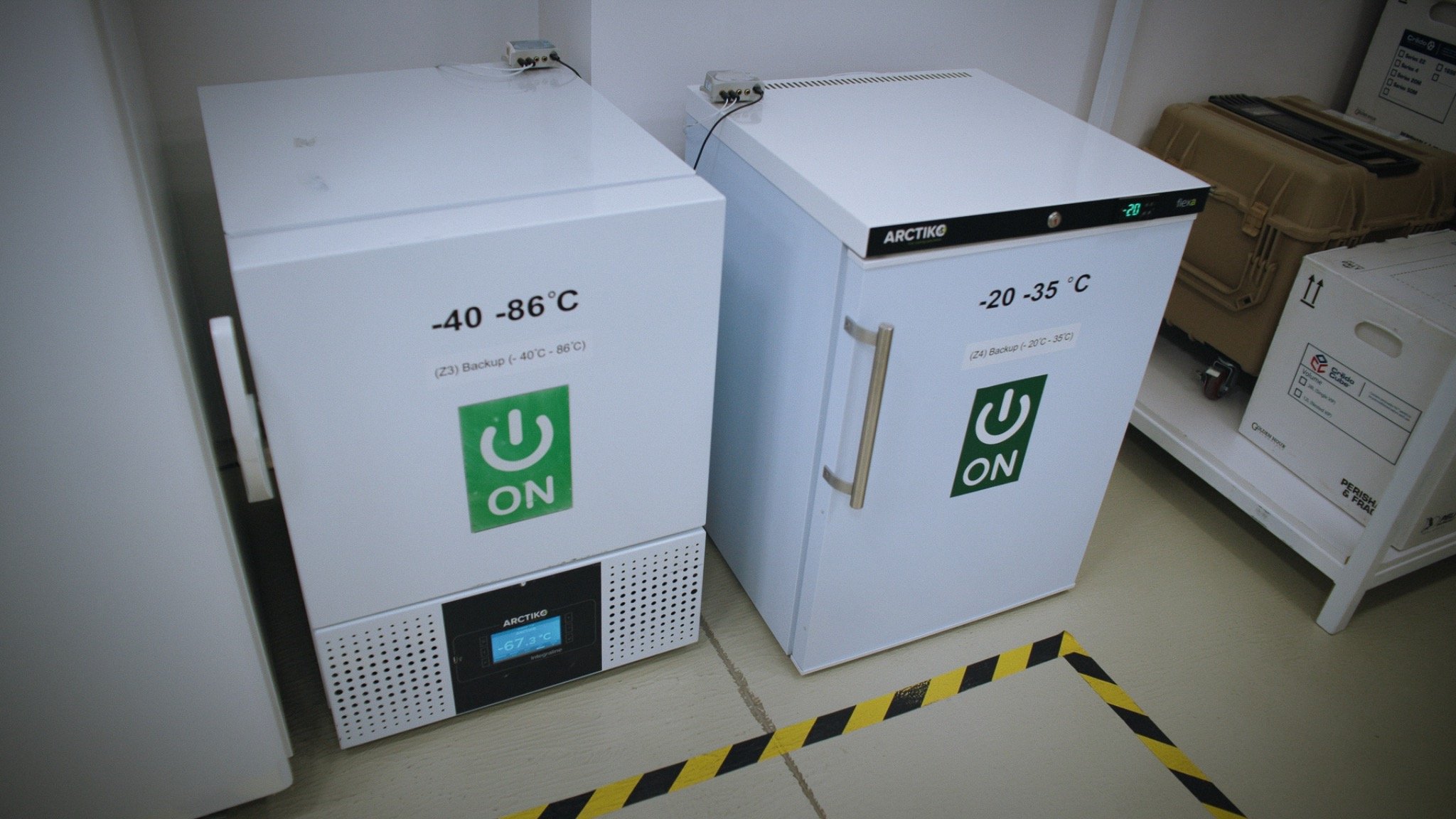
When samples cannot ship immediately, they wait in our validated storage. Biological sample storage covers the ranges below, including ultra-low and cryogenic storage. The ranges show what our equipment covers; the limits for each study come from its protocol or lab manual.
- Controlled ambient: +15 to +25 °C
- Refrigerated: +2 to +8 °C
- Frozen: -20 to -35 °C
- Ultra-low (deep freeze): -40 to -86 °C
- Cryogenic (liquid nitrogen): down to -197 °C
Clinical trial sample storage is monitored 24/7, with automatic SMS alerts if a reading drifts. Biospecimen storage and the storage of clinical trial samples follow the same rules: every sample is logged, assigned to its study and stored in the correct zone. Our biological sample storage service covers cold storage of biological samples for short holds, and cryogenic sample storage in liquid nitrogen when a protocol requires it. Long-term storage of biological samples and biobank storage are available on request, so samples can stay with one partner for the life of the study.
Cryogenic shipping and temperature-controlled transport
Some samples must stay frozen or cryogenic all the way to the lab. Transport conditions differ from storage conditions, so we list them separately. Frozen samples are transported in qualified packaging using the appropriate refrigerant for the required study conditions, and ultra-cold and cryogenic shipping are part of our standard service.
- +15 to +25 °C and +2 to +8 °C for ambient and refrigerated samples
- -22 to -35 °C for frozen samples
- -40 to -86 °C for ultra-low samples, with dry ice as the refrigerant
- Liquid nitrogen for cryogenic samples, in storage and in transport
Each shipment carries a temperature logger, so the lab receives a full temperature record together with the samples.
IATA packaging, UN3373 and dangerous goods compliance
Most clinical trial samples travel as "Biological Substance, Category B" under UN3373, and many need refrigerants. Biological sample packaging must meet IATA rules, or the shipment can be refused at the airport.
- Packaging selected to comply with the applicable IATA requirements, for UN3373 under Packing Instruction 650
- Correct UN3373 shipping marks and labels
- Applicable dangerous goods documentation where required by the shipment classification and refrigerants
- Packaging chosen to hold the temperature for the full journey
We prepare every biological sample shipping job to the same standard and pack it with trained staff, so shipping biological samples does not depend on the experience of each site. Our dangerous goods documentation is prepared in-house.
Export of biological samples to central laboratories
Most global trials test samples in central laboratories outside Georgia. We manage the biological sample export from start to finish.
- Pick up the samples from the site at the agreed time.
- Pack them at the required temperature, in packaging that complies with the applicable IATA requirements.
- Prepare the export documents and, where the classification requires it, the dangerous goods documentation.
- Clear export customs with our customs clearance team.
- Hand over to the international courier and follow the shipment to the lab.
Biological sample transport out of Georgia is often the most time-critical part of the chain, and central lab shipping has to match the lab's receiving days. Sample export from Georgia is planned around flight schedules and the lab's receiving hours, so samples reach the lab inside their stability window. The same planning applies to specimen transport within Georgia.
Chain of custody and sample tracking
Every sample needs a documented history: who collected it, where it was stored, at what temperature and when it was handed over. Our chain of custody biospecimen services record each step.
- Documented hand-overs from site to lab
- Real-time temperature alarms in storage and recorded temperature data in transport
- Documented biological sample tracking, with status updates from our project team
- Agreed reports by site, study and period
Biospecimen management and biological sample logistics depend on this record. Without it, no auditor can follow a sample's journey; with it, biomarker sample logistics and routine safety samples become predictable. The same applies to blood sample logistics, where hours matter, and the lab receives every sample with a complete history.