Patient Access & Recruitment - Unlocking Treatment-Naive Cohorts and Site Density
Guides & Best Practices
პაციენტებზე წვდომა და მათი მოზიდვა - მკურნალობისადმი პირველადი კოჰორტებისა და კვლევითი ცენტრების სიმჭიდროვის ათვისება
GeoStorage LTD.
15 სექტემბერი, 2026
3 წთ კითხვა
გაზიარება:
Executive Overview
Achieving 6-8 week trial activation timelines means little if sites cannot enroll patients on schedule. Enrollment delays remain the single largest cause of protocol amendments and trial extension costs globally, with up to 80% of clinical trials failing to meet their initial enrollment deadlines.
Georgia addresses this bottleneck through two primary structural advantages: high concentrations of treatment-naive patient cohorts and dense, high-volume clinical site networks. By leveraging centralized medical hubs, high patient-to-site ratios, and strong investigator-patient trust, sponsors routinely achieve accelerated recruitment rates across complex therapeutic areas.
Global Benchmark Enrollment: [====== Slow / Fragmented ======] ➔ High Dropout Rates
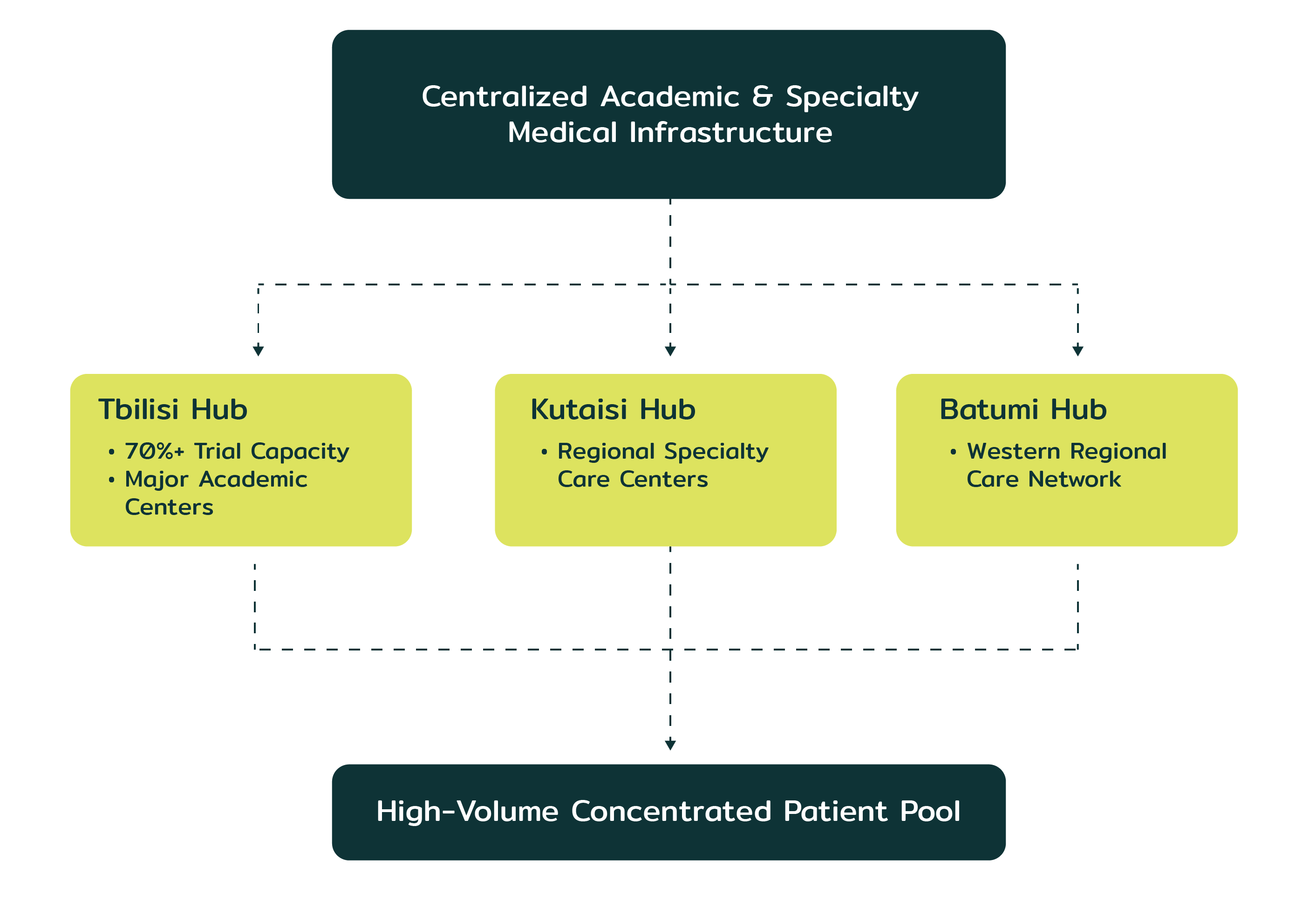
Unlike geographically dispersed trial networks that require dozens of low-enrolling sites, Georgia’s healthcare infrastructure is highly centralized around key metropolitan hubs: Tbilisi, Kutaisi, and Batumi.
Centralized Patient Flow: Over 70% of specialized medical care and trial activity is concentrated within major medical centers in Tbilisi, allowing single sites to draw from large catchment populations.
Streamlined Site Selection: Sponsors can achieve target recruitment goals using fewer overall sites, reducing site management overhead, monitoring costs, and administrative burdens.
2. Treatment-Naive Cohorts & Therapeutic Density
Georgia provides exceptional access to diverse, well-defined patient populations across key indication areas where trial competition in Western Europe and North America creates severe recruitment friction.
Oncology & Hematology: Rapid access to treatment-naive patients across solid tumors and hematological malignancies, facilitating clean baseline data collection for early-to-late phase oncology protocols.
Infectious Diseases & Immunology: Strong patient volume in respiratory, viral, and autoimmune conditions, supported by specialized tertiary referral centers.
Cardiology & Metabolic Disorders: High prevalence of cardiovascular disease, diabetes, and metabolic syndrome, enabling rapid accrual for large-scale outcomes trials.
Neurology & Rare Diseases: High referral compliance through centralized specialist networks, ensuring high screen-to-randomization ratios.
3. High Patient Retention & Protocol Adherence
Recruitment is only half the battle - retaining trial participants throughout the study lifecycle is essential for data integrity and power calculations.
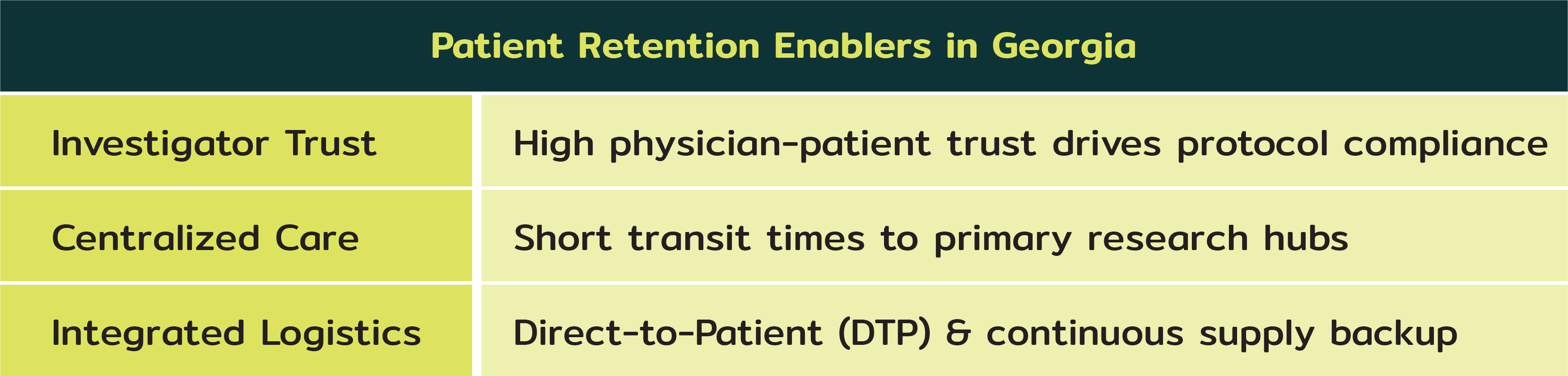
Physician-Patient Relationship: Clinical trial participation in Georgia is strongly driven by investigator recommendation, yielding low drop-out rates and high visit compliance.
Operational Continuity via GeoStorage: Local depot availability ensures that clinical supplies, diagnostic kits, and temperature-sensitive IMPs are never stock-out delayed. Optional Direct-to-Patient (DTP) home delivery protocols keep home-bound or distant patients fully engaged without missed doses.