კომპაქტური ეკოსისტემა — ორიენტირება საქართველოს 650-ზე მეტ კვლევით ცენტრსა და საავადმყოფოთა ქსელში
Guides & Best Practices
კომპაქტური ეკოსისტემა — ორიენტირება საქართველოს 650-ზე მეტ კვლევით ცენტრსა და საავადმყოფოთა ქსელში
GeoStorage LTD.
22 სექტემბერი, 2026
3 წთ კითხვა
გაზიარება:
Executive Overview
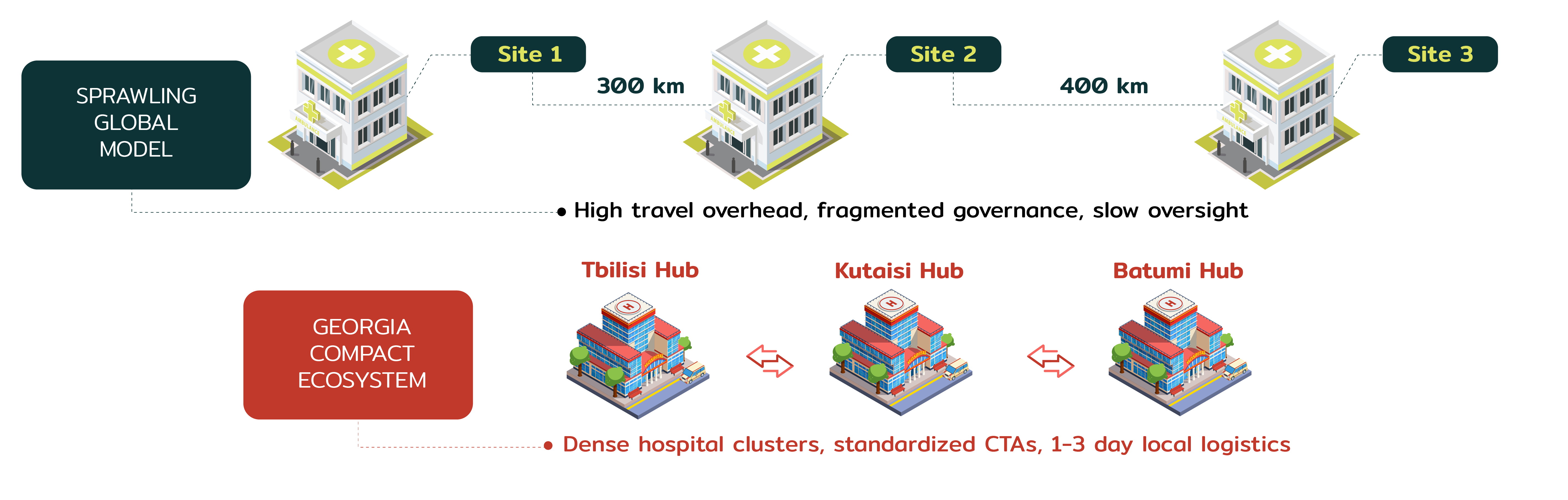
When international sponsors and Contract Research Organizations (CROs) evaluate potential study regions, sheer geographic size is often mistaken for research capacity. However, sprawling trial markets frequently introduce severe operational friction: fragmented health systems, decentralized investigator communication, complex local ethics committee (LEC) variations, and high site management overhead.
Georgia presents a powerful counter-model: a highly concentrated, mature clinical trial ecosystem. Over 650 studies have been conducted in Georgia across global clinical databases, supported by a network of over 250 hospitals and 172 registered investigational sites. By concentrating high-volume tertiary hospitals, experienced ICH-GCP investigators, and streamlined site governance into a compact geographic footprint, Georgia offers sponsors maximum operational density with minimal administrative drag. Chart1.png856.13 KB
1. A Mature, Audit-Ready Trial Landscape
Georgia is not an unproven or emerging frontier; it is a battle-tested destination for global Phase I–IV research. Data generated at Georgian sites routinely undergoes inspection and acceptance by both the US FDA and European Medicines Agency (EMA).
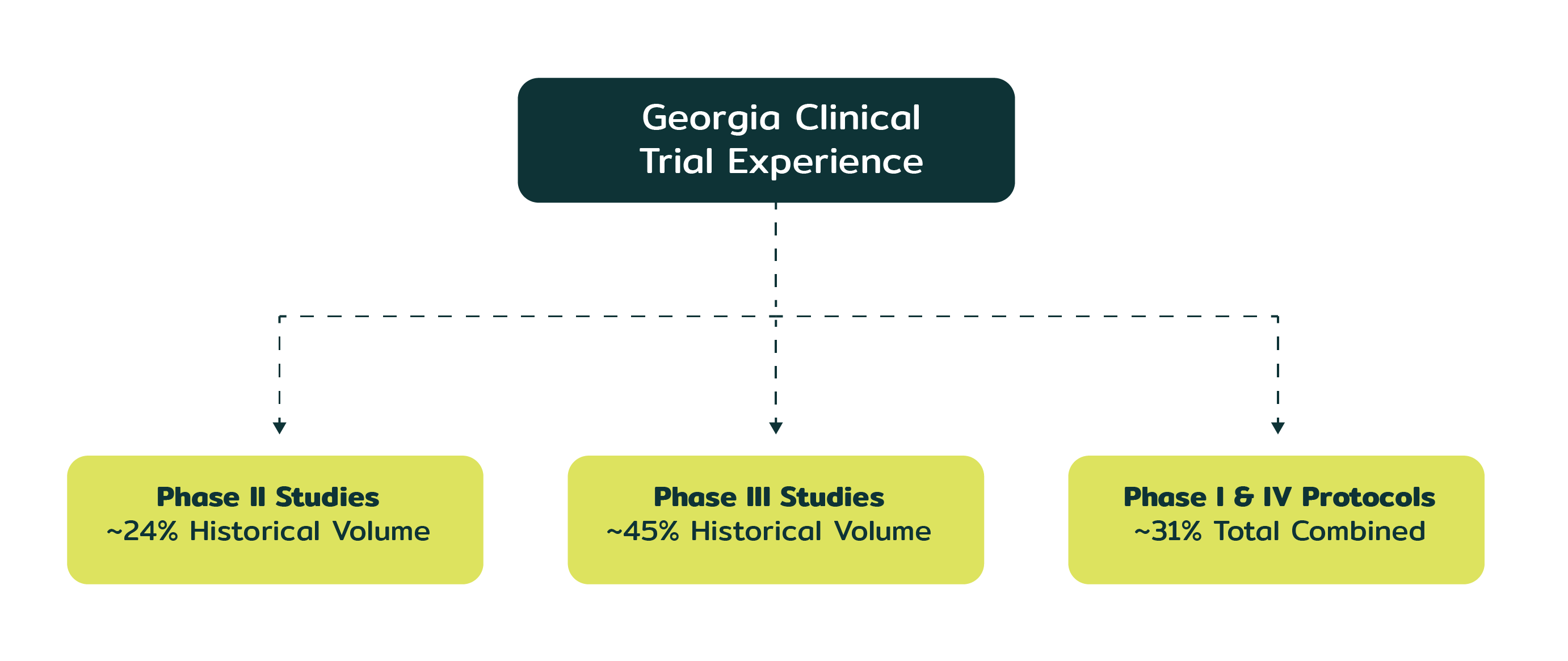
650+ Historical Clinical Studies: Extensive track record across global trials, with Phase II and Phase III protocols representing over 70% of historical study volume.
ICH-GCP Harmonization: Georgian clinical trial regulations are fully aligned with international standards, ensuring seamless data integrity, protocol adherence, and audit readiness.
172+ Qualified Investigational Sites: A high concentration of trial-ready sites equipped with modern diagnostic facilities, bio-sample storage, and accredited staff.
2. Hospital Network Density & Centralized Infrastructure
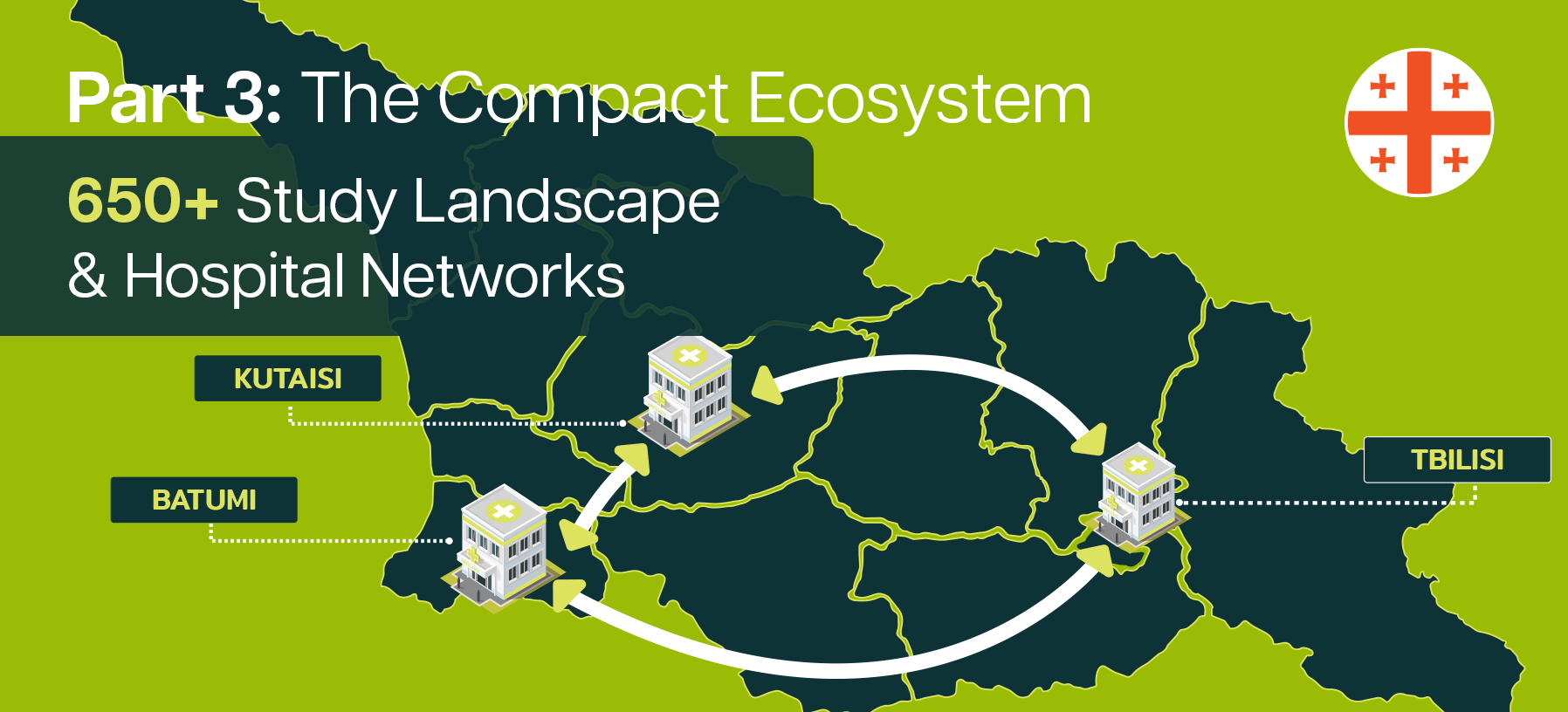
Georgia’s healthcare sector features over 250 hospitals nationwide, but its clinical research infrastructure is strategically aggregated around three major metropolitan hubs: Tbilisi, Kutaisi, and Batumi.
Tbilisi Core: As the capital, Tbilisi hosts the majority of specialized tertiary hospitals, academic medical centers, and dedicated Clinical Trial Units (CTUs). Over 70% of national trial activity is managed within a 30-kilometer radius.
Regional Hubs (Kutaisi & Batumi): Modern regional medical centers provide comprehensive oncology, cardiology, and surgical coverage, serving as vital catchment anchors for western regional populations.
International Accreditation: Leading Georgian centers routinely hold accreditations from international bodies such as Joint Commission International (JCI), Accreditation Canada, and AACI.
3. Streamlined Site Governance & Tripartite Contracting
In many European countries, contracting with multiple independent hospital networks can consume 3–6 months of startup time. Georgia circumvents this friction through standardized governance structures:
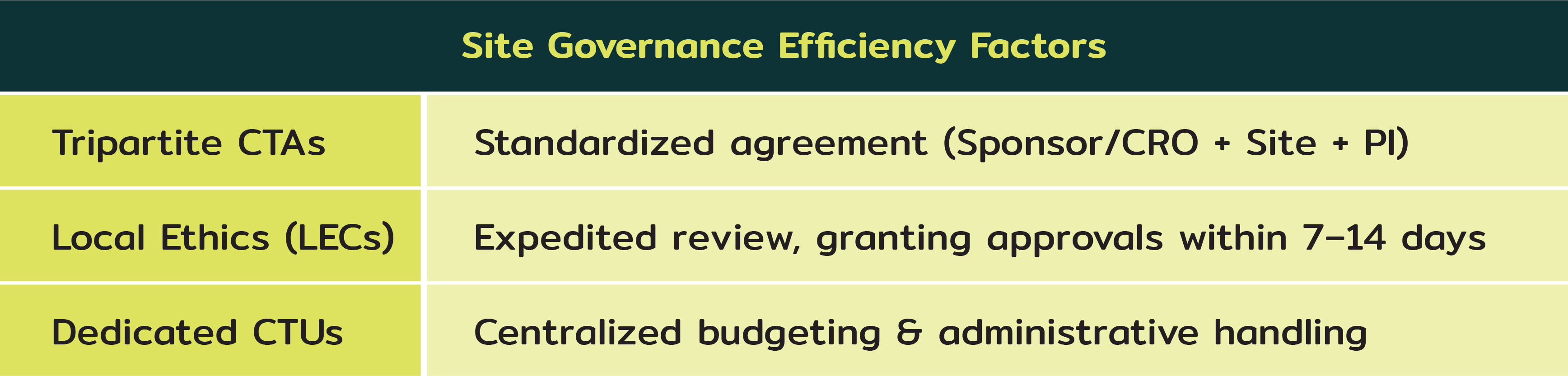
Standardized Tripartite Contracts: Most institutions utilize a unified, bilingual CTA template executed simultaneously between the Sponsor/CRO, the medical institution, and the Principal Investigator.
Parallel Local Ethics Approval: Local Ethics Committees (LECs) operate at institutional levels with predictable review cycles, granting approvals within 7 to 14 days.
Summary: Georgia's Compact Ecosystem vs. Sprawling Trial Markets